2023 Alexa Mobile Redesign
A streamlined smart home app that puts your most-used controls front and center, right when you need them.
A dedicated space in the app where users can discover deals on Alexa-enabled Amazon devices.
Problem
The Alexa mobile app has an identity problem. It's packed with features, but most users can't find them or don't use them.
The core audience relies on the app for smart home control, yet the experience isn't built around what they actually need.
The Alexa mobile app has an identity problem. It's packed with features, but most users can't find them or don't use them.
The core audience relies on the app for smart home control, yet the experience isn't built around what they actually need.
Details
My Role: One of Two lead designers
Duration: 12 months
Scope: End-to-End process
Partners: Engineer, Product, Research, Designers
My Role: One of Two lead designers
Duration: 12 months
Scope: End-to-End process
Partners: Engineer, Product, Research, Designers
Highlights
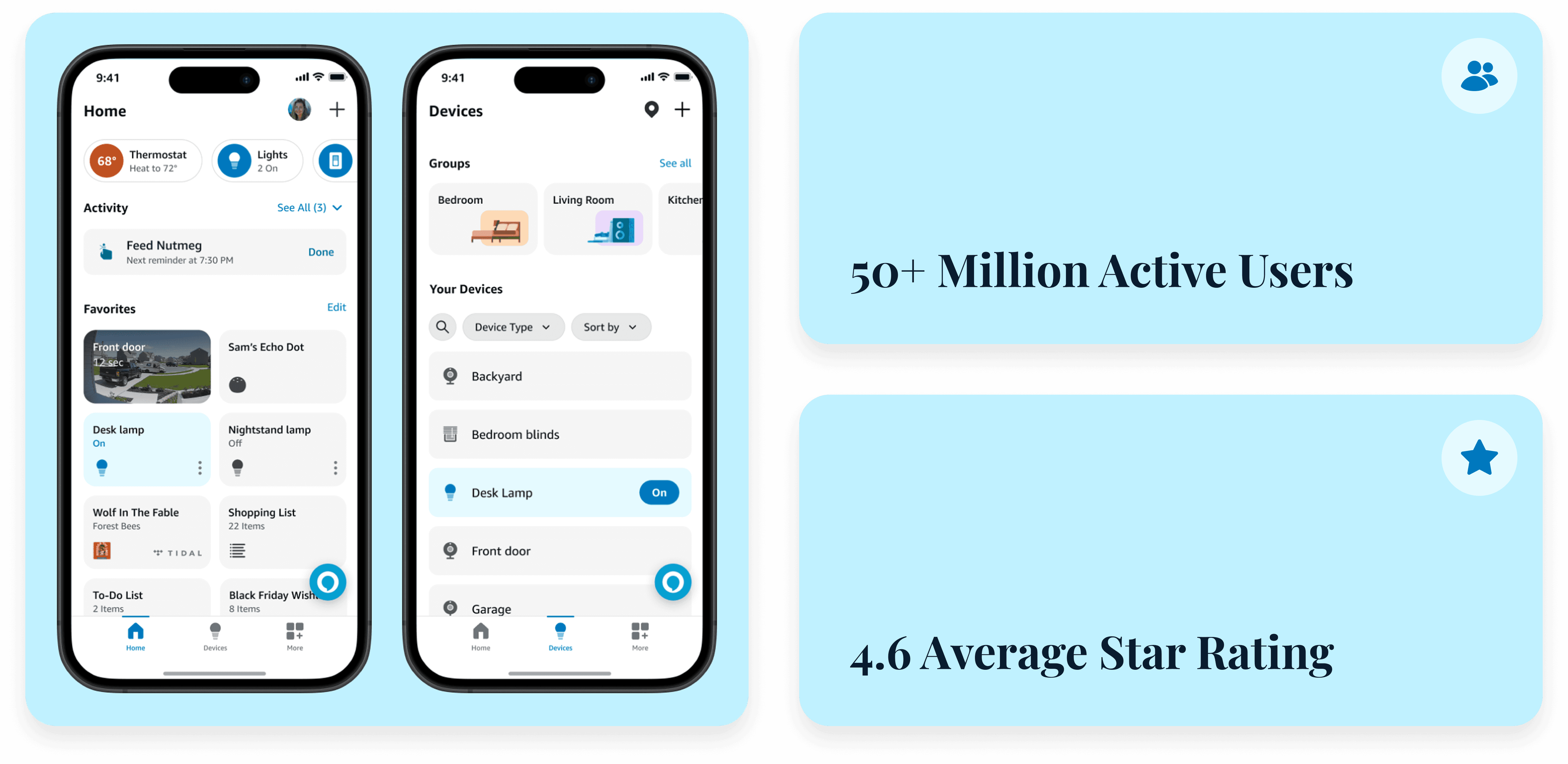
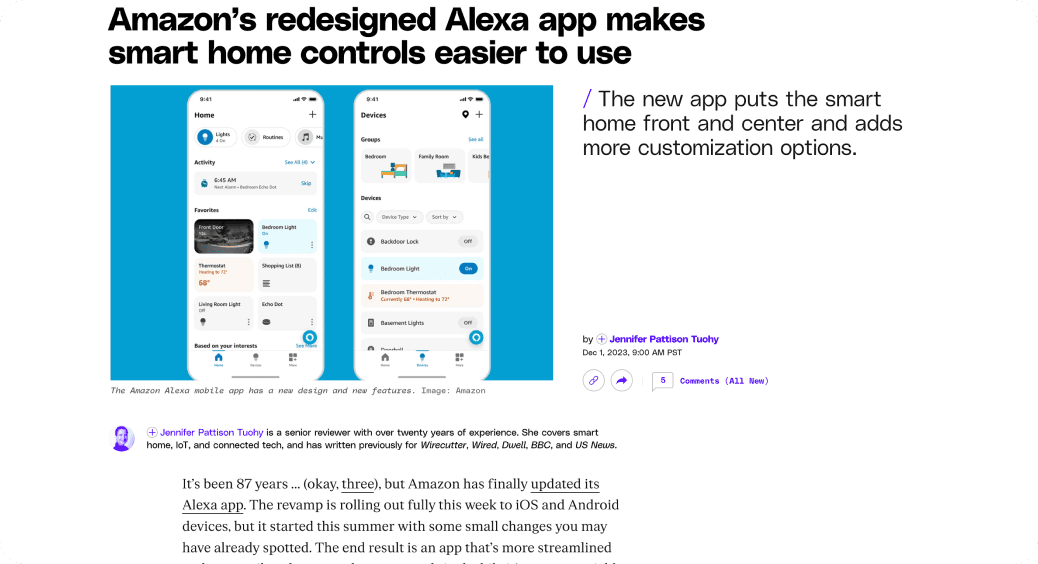
This redesign streamlined the mobile app from 5 tabs down to 2, and shifted the home screen's focus from feature discovery to what users actually want: quick access to their smart home controls.
This redesign streamlined the mobile app from 5 tabs down to 2, and shifted the home screen's focus from feature discovery to what users actually want: quick access to their smart home controls.
Early Explorations
I start every project with unconstrained exploration. This gives me space to play, design what I'd actually want to use, and collaborate openly with other designers on the team.
I start every project with unconstrained exploration. This gives me space to play, design what I'd actually want to use, and collaborate openly with other designers on the team.
Home
Devices
More
Home Channel
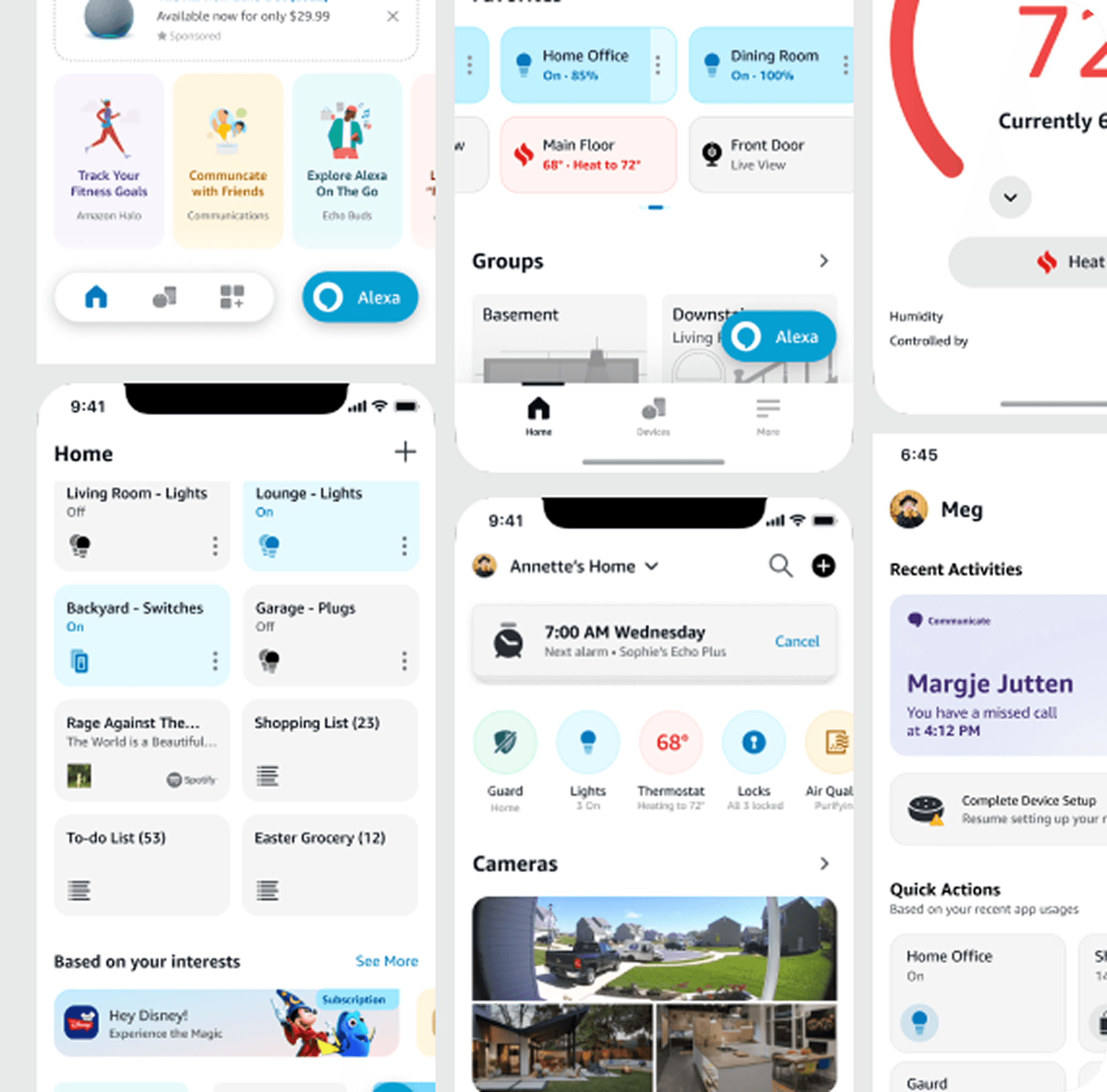
The Home Channel is where customers spend most of their time in the app. We introduced Favorites, a personalized space that gives users quick access to their most important controls. A coworker led the design for this channel, but I contributed during the research phase. Their work also helped shape my approach to the Devices Channel, creating consistency between the two experiences.
Home
Devices
More
Home Channel
The Home Channel is where customers spend most of their time in the app. We introduced Favorites, a personalized space that gives users quick access to their most important controls. A coworker led the design for this channel, but I contributed during the research phase. Their work also helped shape my approach to the Devices Channel, creating consistency between the two experiences.
Home
Devices
More
Home Channel
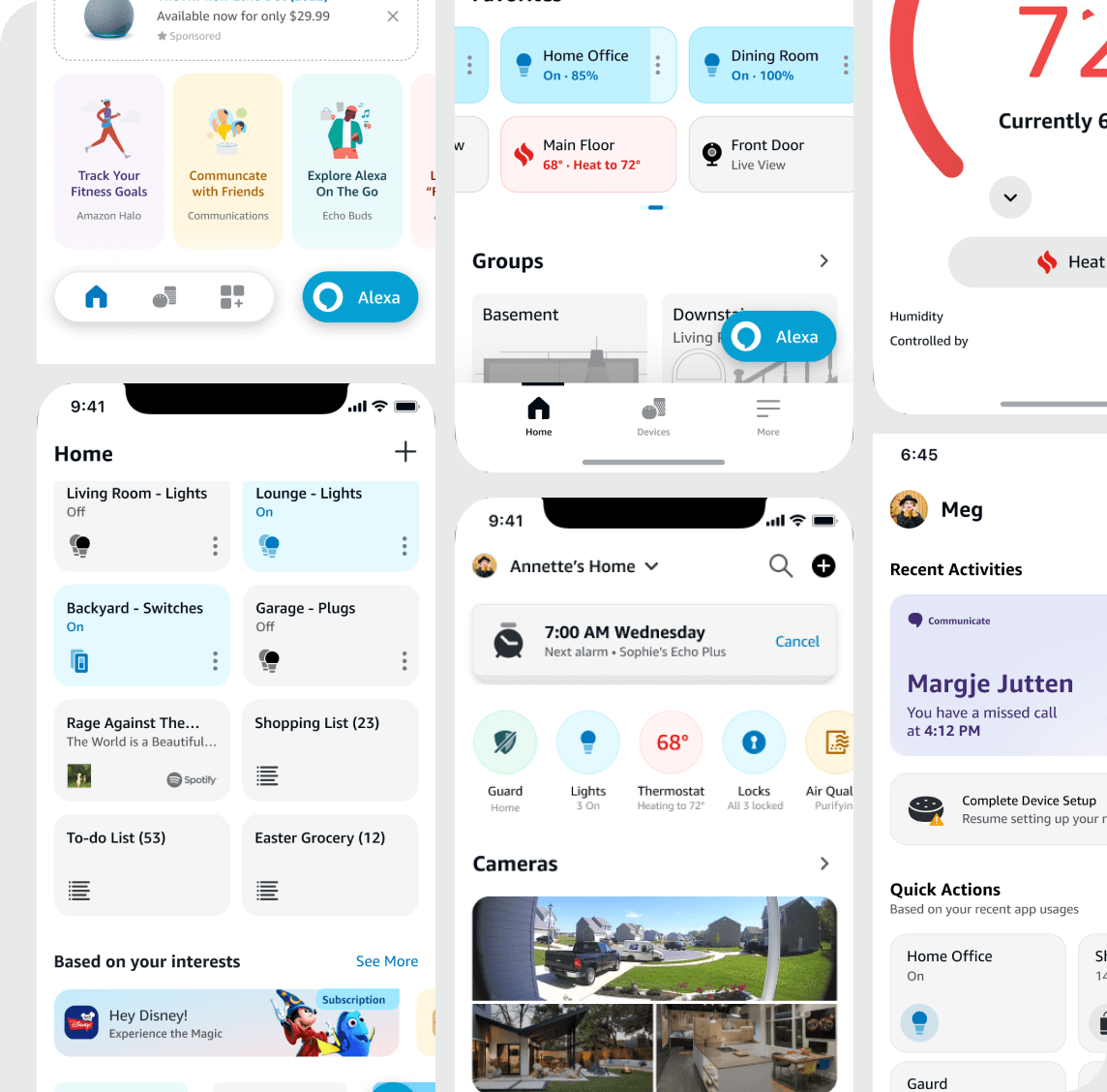
The Home Channel is where customers spend most of their time in the app. We introduced Favorites, a personalized space that gives users quick access to their most important controls. A coworker led the design for this channel, but I contributed during the research phase. Their work also helped shape my approach to the Devices Channel, creating consistency between the two experiences.
Research
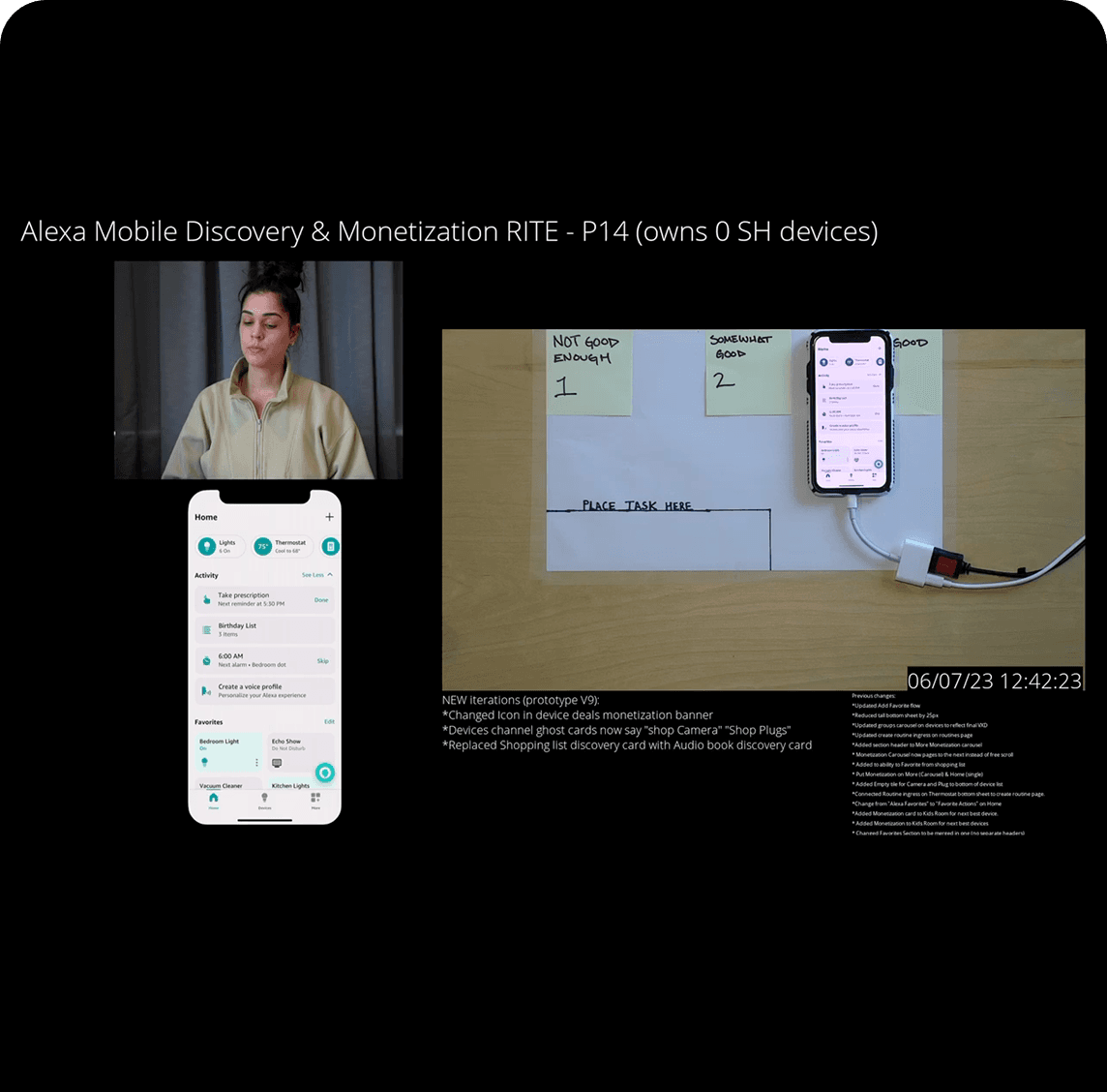
I partnered with our research team to implement Rapid Iterative Testing and Evaluation (RITE),
a new research method for the team. This approach let us test
and iterate quickly, refining designs based on real customer feedback in real time.
I partnered with our research team to implement Rapid Iterative Testing and Evaluation (RITE),
a new research method for the team. This approach let us test
and iterate quickly, refining designs based on real customer feedback in real time.
RITE Study
Prototyping
Results
How does RITE work?
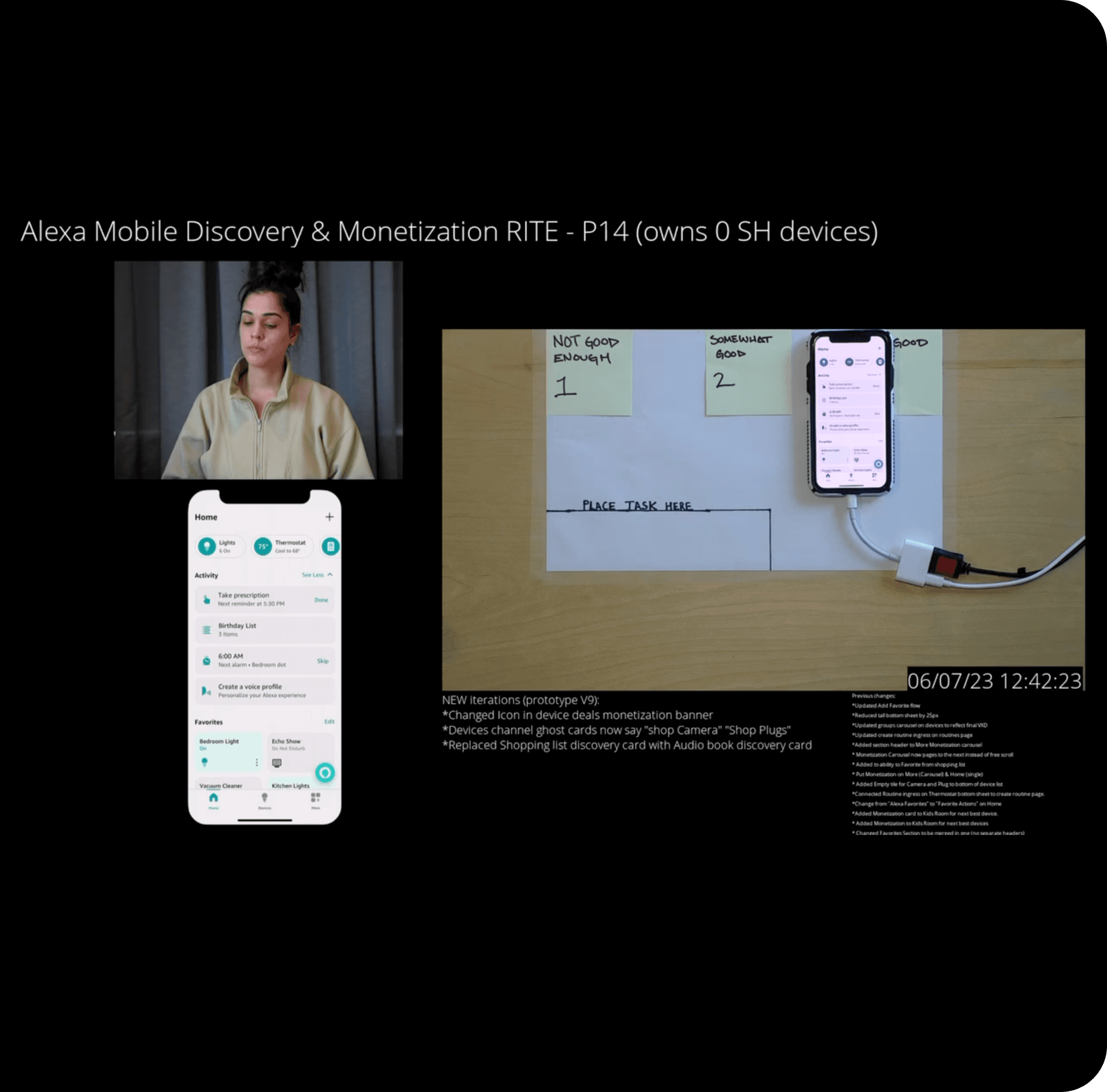
Rapid Iterative Testing and Evaluation (RITE) is a multi-day research process where participants complete
a series of tasks, then rate each one from "not good enough" to "very good."
When a task gets a low rating, the team immediately evaluates what needs to change and updates the design before the next participant. By the end of the study, tasks should trend green (very good) and feel easy
to complete.
RITE Study
Prototyping
Results
How does RITE work?
Rapid Iterative Testing and Evaluation (RITE) is a multi-day research process where participants complete
a series of tasks, then rate each one from "not good enough" to "very good."
When a task gets a low rating, the team immediately evaluates what needs to change and updates the design before the next participant. By the end of the study, tasks should trend green (very good) and feel easy
to complete.
RITE Study
Prototyping
Results
How does RITE work?
Rapid Iterative Testing and Evaluation (RITE) is a multi-day research process where participants complete
a series of tasks, then rate each one from "not good enough" to "very good."
When a task gets a low rating, the team immediately evaluates what needs to change and updates the design before the next participant. By the end of the study, tasks should trend green (very good) and feel easy
to complete.
Final Design

Articles
Derek Burkhardsmeier 2025